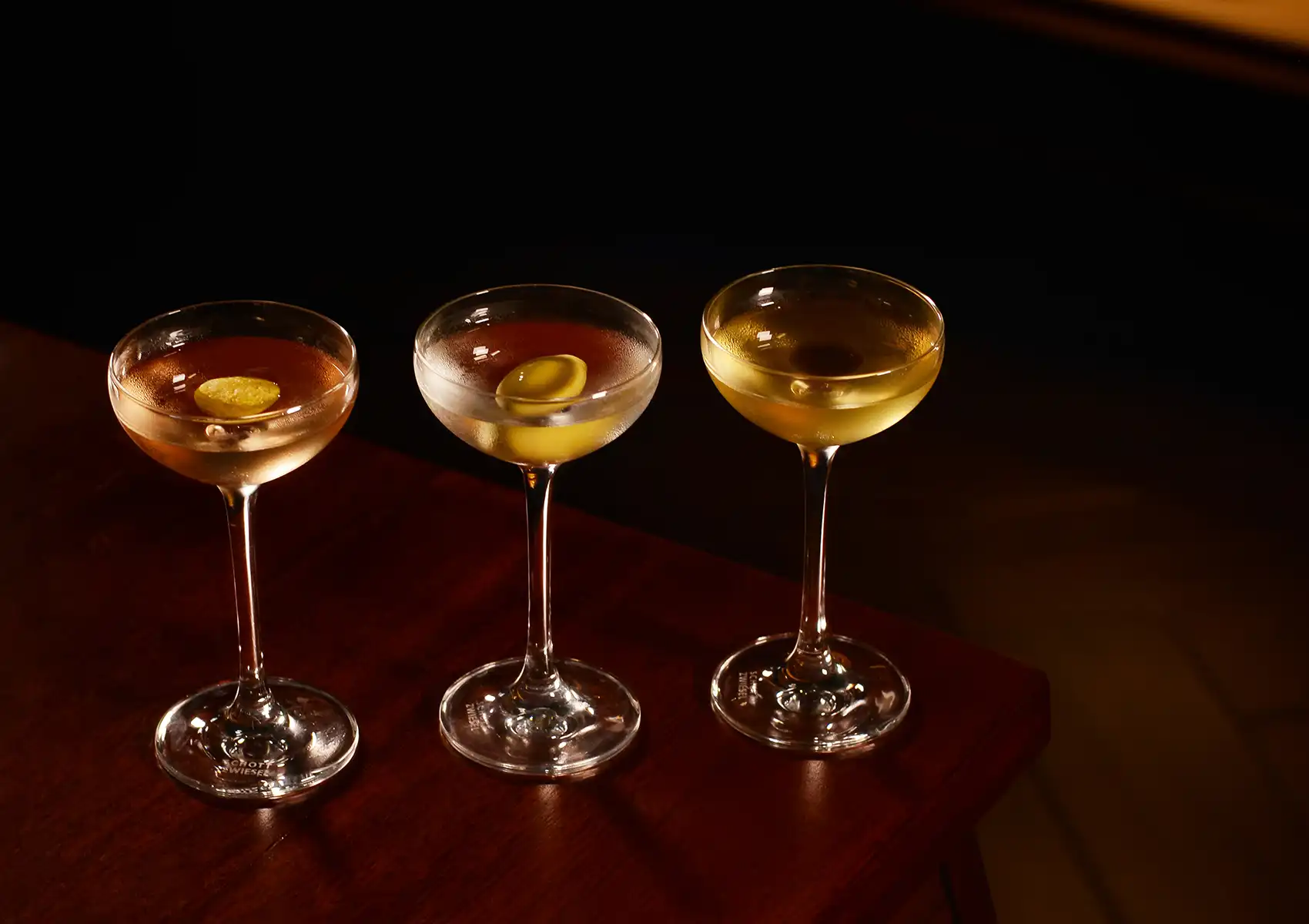
Two of the world’s most recognised cocktails rely on an ingredient that is rarely ordered on its own. At a cocktail bar in Ubud, vermouth is the bottle most likely to be quietly excellent or quietly overlooked. Vermouth is a wine, not a spirit, and once you understand that, the Martini and the Negroni start to make much more sense.
What Is Vermouth?
Vermouth is an aromatised, fortified wine. A base wine, usually white and relatively neutral, is fortified with grape spirit and then flavoured with botanicals, with wormwood traditionally providing the defining bitterness. The name comes from the German word for wormwood, Wermut.
The term aromatised is what separates vermouth from other fortified wines such as sherry and port. Vermouth can contain a long list of botanicals, including gentian, cinchona, citrus peel, cardamom, sage and vanilla, depending on the producer and style.
The reason this matters at the bar is simple. Vermouth typically sits around 15 to 20 per cent alcohol by volume, while gin is usually above 40 per cent. Adding vermouth is not simply about adding alcohol. It brings flavour, aroma, bitterness and texture while also lowering the overall strength of the drink.
The Types of Vermouth
With that structure understood, vermouth styles are generally divided by sweetness, colour and botanical profile. Three styles do most of the work on cocktail lists.
Dry vermouth is pale, crisp and lightly herbal, with noticeable bitterness and a fresh, savoury character. It is the Martini’s other half, and in a well-made Martini it is not simply a token measure. It is a genuine part of the drink.
Sweet vermouth, often called rosso, is darker, richer and more spiced, with notes of vanilla, dried fruit and caramel alongside its bitterness. It is the Negroni’s middle third and the Manhattan’s, carrying far more flavour than its proportion suggests.
Bianco vermouth sits between the two in some ways. It is usually pale but sweeter than dry vermouth, with floral, vanilla and citrus notes. It is particularly enjoyable served chilled or over ice, although it appears less often in classic cocktails.
Beyond these styles, there are more specialised expressions. Chinato vermouths, for example, use cinchona bark to add a more pronounced bitter character, pushing them towards aperitivo territory. These are the bottles that can make a familiar drink taste considerably less familiar.
Why Vermouth Matters in Cocktails
Because it supplies bitterness, body and botanical character at a lower alcohol level, vermouth can determine the character of a cocktail far more than its share of the glass might suggest.
In a Martini, the ratio of gin to dry vermouth is the entire argument. A wet Martini contains more vermouth and generally tastes softer, rounder and more herbal. A dry Martini contains less and puts greater emphasis on the gin. Neither approach is inherently more correct.
In a Negroni, the equal-parts structure makes sweet vermouth a partner rather than a modifier. Change the vermouth, and you can change the character of the drink significantly, even when the gin and bitter aperitivo stay the same.
Vermouth also works as a bridge between ingredients. Combine a spirit with vermouth, and you introduce a softer texture and greater aromatic complexity while keeping the drink lighter than a spirit-only build. That principle sits behind many lower-alcohol cocktails on modern lists.
How to Drink Vermouth
Because vermouth is wine-based, an opened bottle needs more care than a bottle of spirits.
Once opened, vermouth is best kept refrigerated and used while it is still fresh. How long it remains at its best depends on the bottle, storage conditions and how often it is opened, but a few weeks is a sensible guide for peak freshness. A bottle left open at room temperature for months can lose its freshness and develop flat, oxidised flavours.
Vermouth is also worth drinking on its own. Serve it chilled in a wine glass with ice and a twist, or lengthen it with soda for a lighter aperitif. Bianco and sweet vermouth are particularly approachable starting points, while dry vermouth works well for drinkers who prefer something crisp and savoury.
Ordering vermouth on its own can also be a quick test of a bar. It gives you a chance to taste the bottle itself rather than only experiencing it as one component of a cocktail.
Vermouth at Pinstripe Bar
The vermouth selection at Pinstripe Bar treats the category as an ingredient worth choosing rather than a bottle that simply needs to be present.
Mancino and Cocchi cover classic dry and sweet positions, while Cocchi Barolo Chinato sits at the more bitter and complex end. Made with a Barolo base and flavoured with botanicals including cinchona, it is a style worth trying on its own, particularly towards the end of a meal.
In the cocktails, Dolin Dry and Cocchi Americano appear in the Martini Flight, where the point of this article becomes something you can actually taste. Three 40 ml pours are built around Tanqueray No. TEN, with the aromatised wine changing between serves. The flight lets you focus on how the vermouth changes the character of the drink while the gin remains constant.
On the Negroni side, vermouth forms part of the blend ageing in the Solera Barrel Negroni. Comparing it with the Holy Negroni gives you a direct way to experience how time in wood changes the relationship between the vermouth, gin and bitter aperitivo.
Ask the bar team for the Barolo Chinato over ice at the end of the evening. It makes the case for vermouth as a drink in its own right, rather than simply an ingredient behind the bar.
Reserve Your Table at Pinstripe Bar

Vermouth rewards a bar that treats its bottles with care, which is one reason to choose a cocktail bar in Ubud deliberately rather than simply ordering the nearest Martini. Pinstripe Bar sits above the Valley of the Kings and opens daily from 4 PM to 11.30 PM, with the food menu from 5 PM to 9 PM and live music on Friday and Saturday evenings.
Ask for the Martini Flight if you want to compare vermouth styles in a cocktail, or try a vermouth over ice if you want to taste the wine itself.
Frequently Asked Questions
What is the difference between dry and sweet vermouth?
Dry vermouth is pale, crisp and herbal, and is commonly used in Martinis. Sweet vermouth is darker, richer and more spiced, and is a key ingredient in cocktails such as the Negroni and Manhattan. Both are aromatised, fortified wines.
Is vermouth a wine or a spirit?
Vermouth is a fortified wine. It starts with wine, which is then fortified with grape spirit and flavoured with botanicals. Its alcohol content is generally much lower than that of a base spirit such as gin or whisky.
Do you refrigerate vermouth?
Yes. Once opened, vermouth is best stored in the refrigerator because it can oxidise like other wine-based drinks. For the best flavour, use an opened bottle while it is still fresh rather than leaving it at room temperature for an extended period.