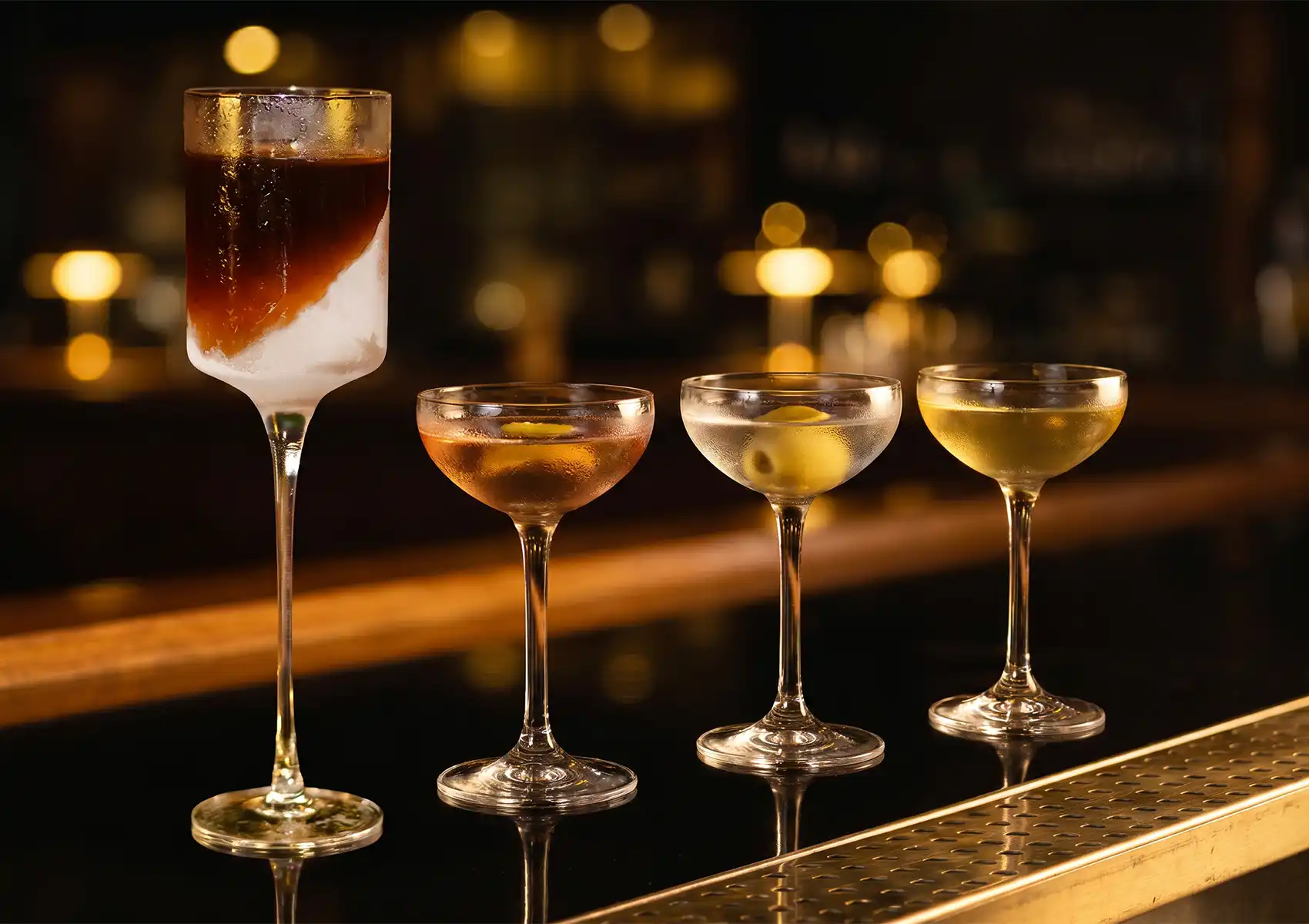
A long gin menu and a blank expression are familiar companions. The names are not always obvious, and the difference between one style and the next can be invisible until someone explains it. Pinstripe Bar is a cocktail bar in Ubud with 18 gin varieties and a cocktail programme built around exploring them. This guide explains the main types of gin cocktails, what separates one category from another, and what each tastes like before you sit down.
What Are Gin Cocktails
Before sorting gin drinks into categories, it helps to understand what sets them apart.
A gin cocktail is any mixed drink built on gin as its base. What makes gin distinct is its botanical character. Where vodka is neutral, and whisky leans on grain and oak, gin is defined by juniper and botanicals such as citrus peel, coriander, angelica and florals. That built-in complexity means gin interacts with mixers and garnishes in a more layered way than other spirits, which is why it produces such a wide range of cocktail styles.
Why Understanding Gin Cocktail Types Matters
Gin’s range is a strength, but for a newer drinker, it can also be the source of the confusion we started with.
Gin is one of the more versatile spirits, so a single base can appear in drinks that taste nothing alike. Knowing a few basic categories, stirred, shaken, long and sour, removes the mystery. Once you recognise which family a cocktail belongs to, you know roughly how it will taste before it arrives, and ordering becomes far more assured.
The Main Types of Gin Cocktails
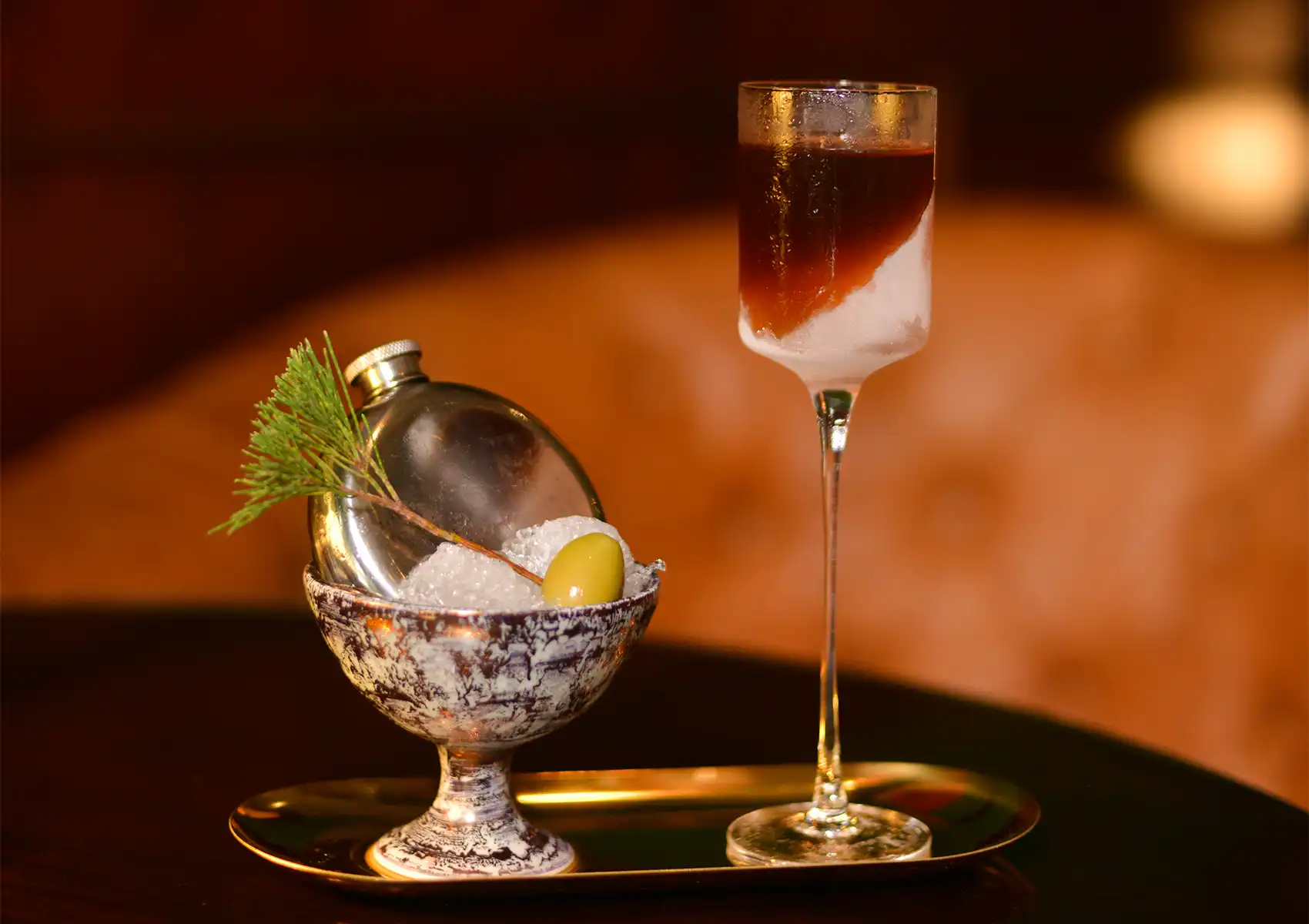
Gin drinks fall into a handful of recognisable categories, each with its own character, serve style and flavour profile.
Think of the categories below as a tasting map rather than a rigid rulebook. They are a starting point for exploration, and the best way to use them is to find the style that suits your mood and order from there.
Martini Style Cocktails
A Martini-style gin cocktail is defined by simplicity and precision: gin to dry vermouth, stirred over ice and strained. Dilution and temperature matter enormously, as a well-made Martini should be cold, clean and silky. The profile is spirit-forward, dry and botanical, so it rewards guests who want to taste the gin itself.
Classic Gin Cocktails
The classic category covers the established canon, timeless drinks such as the Negroni and the Gimlet. What makes a gin cocktail classic is balance, the sophisticated interplay of bitter, sweet and botanical, with the gin shaping the result. These have endured because they are reliably satisfying, offering structure, depth and a clear sense of the gin at their core.
Sour Gin Cocktails
The sour family is the shaken, citrus-forward category. Fresh acidity and a little sweetness are shaken with gin, the cold result bright and lifted, the citrus playing against gin’s botanicals to create zip. It suits guests who prefer a lighter, fresher drink, and it is often the easiest entry point for someone new to gin.
Gin Highball Cocktails
A highball is a single spirit topped with a mixer over ice in a tall glass. The length and dilution change the experience entirely, making the drink long, cold and refreshing. This is the most approachable category, a natural choice for new gin drinkers or a warm evening.
Gin and Tonic Variations
The gin and tonic deserves its own mention, because the same format tastes completely different depending on the gin and tonic you choose. A floral gin with elderflower tonic turns delicate and perfumed; a juniper-heavy gin with a classic Indian tonic stays crisp and traditional; a complex botanical gin with a Mediterranean tonic leans aromatic and herbal. Quality mixers make all the difference, which is why a good bar reaches for brands like London Essence and Fever-Tree.
Gin Cocktails Worth Ordering at Pinstripe Bar
Theory is one thing, but the categories come alive when you can taste them, and this is where Pinstripe Bar comes into its own.
As a cocktail bar in Ubud, Pinstripe Bar has built a curated selection of 18 gins and crafts every type of gin cocktail with a sense of occasion, drawing on top-shelf spirits and local Indonesian ingredients. Each cocktail below is a live example of its category, so the list doubles as a way to taste the guide in practice.
The Martini Flight at Pinstripe Bar
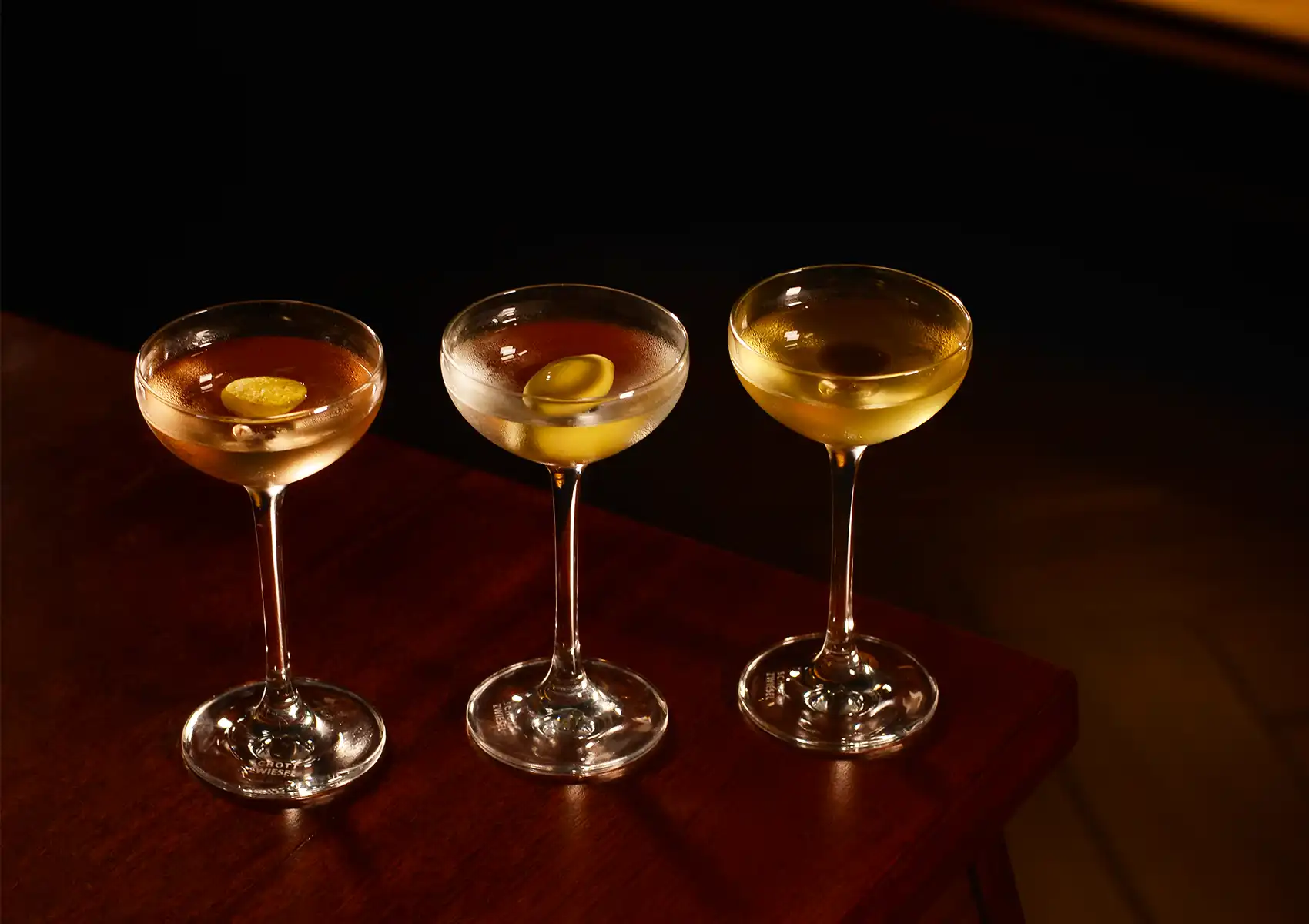
The Martini Flight is the clearest lesson in how Martini-style cocktails differ despite sharing a base spirit. It sets the Pinstripe Martini, the Apéritif Martini and the Sandalwood Martini side by side, all built on Tanqueray No. TEN, yet each on a different path: one bright and savoury, one classically dry and clean, one soft and aromatic with sandalwood. Tasting them together shows how dilution, modifiers and botanicals reshape a single style.
The Scarface and Harlem
These two show how the classic gin cocktail category expands when local Indonesian ingredients come into the picture. The Scarface (Tanqueray No. TEN, Fernet Branca, strawberry balsamico, pomelo, torch ginger, cacao butter aged) keeps a classic bittersweet backbone while layering in spice and depth. The Harlem (Tanqueray No. TEN, Amaretto Disaronno, passion fruit, sesame cream, pandan, miso, albumin, soda) is richer and more textured still. Both are complex, yet each remains recognisably classic in its balance and its respect for the gin at its core.
The Primitivist
The Primitivist (Tanqueray No. TEN, coconut rum, Campari, pineapple, passion fruit, pandan, lemongrass, soy milk clarified) is a longer, tropical-style gin drink that borrows from the highball format and lifts it through layered Indonesian botanicals. Where a simple highball stretches gin with one mixer, this reimagines the idea, keeping the length and refreshment while adding pandan, lemongrass, and tropical fruit. It is the highball category seen through a local lens, easy to drink yet full of detail.
The Holy Negroni and Solera Barrel Negroni
Placing these two side by side shows how a single classic type can be interpreted at different depths. The Holy Negroni (Tanqueray No. TEN, Cocchi Americano, gentian, sandalwood, cananga, pomelo) is the lighter, aromatic expression, holding the Negroni’s bittersweet balance while a layer of sandalwood and citrus blossom lifts it. The Solera Barrel Negroni (Tanqueray No. TEN, Cocchi Storico, Campari, coconut, rested in barrel for two years) is the aged, more complex version, rounded and mellow from its time in wood. Together, they show how a gin cocktail can evolve within its own category, from bright and fragrant to deep and smooth.
Reserve Your Table at Pinstripe Bar
The best way to learn the types of gin cocktails is to taste them. Start with something long and refreshing, move on to a Martini from the flight, and finish with a Negroni as the live music begins on a Friday. Every style in this guide is on the menu at Pinstripe Bar, the cocktail bar in Ubud. Reserve your table and let the bar team take care of the rest.