All Cognac is brandy, but very little brandy is Cognac. That one sentence settles most of the confusion, and at a cocktail bar in Ubud, the distinction matters when you want to know whether you are ordering a spirit from a tightly regulated French appellation or simply a brandy made from fruit.
What Brandy Actually Is
Brandy is the broad category, and the definition is deliberately wide. It is a spirit distilled from fermented fruit or fruit-based wine. Grapes account for much of the category, but apples, pears, cherries and plums can all produce brandy, and different wine-producing regions have their own traditions.
Because the term is so broad, it guarantees very little about the finished spirit. A brandy might be aged for decades in French oak or bottled relatively young. It might come from a single grape variety and estate or be a blend of different spirits. The word tells you the broad raw material and production category, but not the specific place, ageing or production style.
That is the distinction Cognac brings to the category.
What Makes Cognac Different
Given how broad the term brandy is, Cognac’s identity comes from a tightly defined set of rules covering its origin, grapes, distillation and ageing.
The place comes first. Cognac can only be produced in the legally defined Cognac region of western France, which is divided into six crus. Grande Champagne and Petite Champagne are particularly associated with elegant, long-lived eaux-de-vie, while the other crus have their own characteristics.
The grape is specified too. Ugni Blanc is the dominant variety, valued for its high acidity and relatively low sugar content. The resulting wine is not especially appealing as a table wine, but its acidity and freshness make it well suited to distillation.
The distillation method is also defined. Cognac is distilled twice in traditional copper pot stills, concentrating the wine into an eau-de-vie with the character required for ageing. It must then be aged in oak for a legally defined minimum period.
Armagnac, another famous French brandy, follows a different set of rules and is often produced using continuous column distillation rather than Cognac’s double-distillation method. Both are brandies, but they are distinct appellations with different production traditions.
The Cognac Grades
Cognac’s ageing classifications are useful because they tell you something specific about the youngest eau-de-vie in the blend.
VS, or Very Special, requires the youngest eau-de-vie in the blend to have been aged for at least two years. It is bright, fresh and often particularly well suited to cocktails and long drinks.
VSOP, or Very Superior Old Pale, requires a minimum of four years. It sits comfortably between mixing and sipping, with more developed oak and dried-fruit character while retaining enough freshness for cocktails.
XO, or Extra Old, requires a minimum of ten years. Expect deeper dried-fruit, spice, oak and leather notes, although the exact character depends on the house and blend. It is commonly enjoyed neat or with a small amount of water, but premium XO can also be used in cocktails when the recipe is designed to showcase it.
Beyond XO, Cognac houses use designations such as Extra and Hors d’Âge for older blends. These categories have their own regulatory requirements, but they sit beyond the basic VS, VSOP and XO ladder.
How to Drink Cognac
Because the grades differ, the best serve depends on both the Cognac and what you want from it.
Older Cognac is well suited to a tulip-shaped glass, which concentrates the aromas without exposing the spirit to as much air as a traditional wide balloon. Serve it at room temperature and give it a little time in the glass before tasting.
Younger Cognac can work well over ice, particularly when you want a longer, more refreshing serve. One large cube melts more slowly than several smaller pieces, giving you gradual dilution.
Cognac also works naturally in cocktails. Its grape-derived fruit character, oak spice and rounded texture allow it to take the place of whisky in some classic templates. The Sidecar is the obvious example, combining Cognac with lemon and orange liqueur. A Sazerac-style drink can work too, while a Cognac sour offers another straightforward way to experience the spirit.
Cognac at Pinstripe Bar
The Cognac list at Pinstripe Bar covers several major houses, making it possible to compare styles rather than simply read about them.
Hennessy, Martell, Rémy Martin, Courvoisier and Camus each have recognisable house styles, and asking the bar team to pour two expressions side by side is one of the quickest ways to understand what a blending house does. If you want to isolate the effect of ageing, ask for a VSOP and an XO from the same producer.
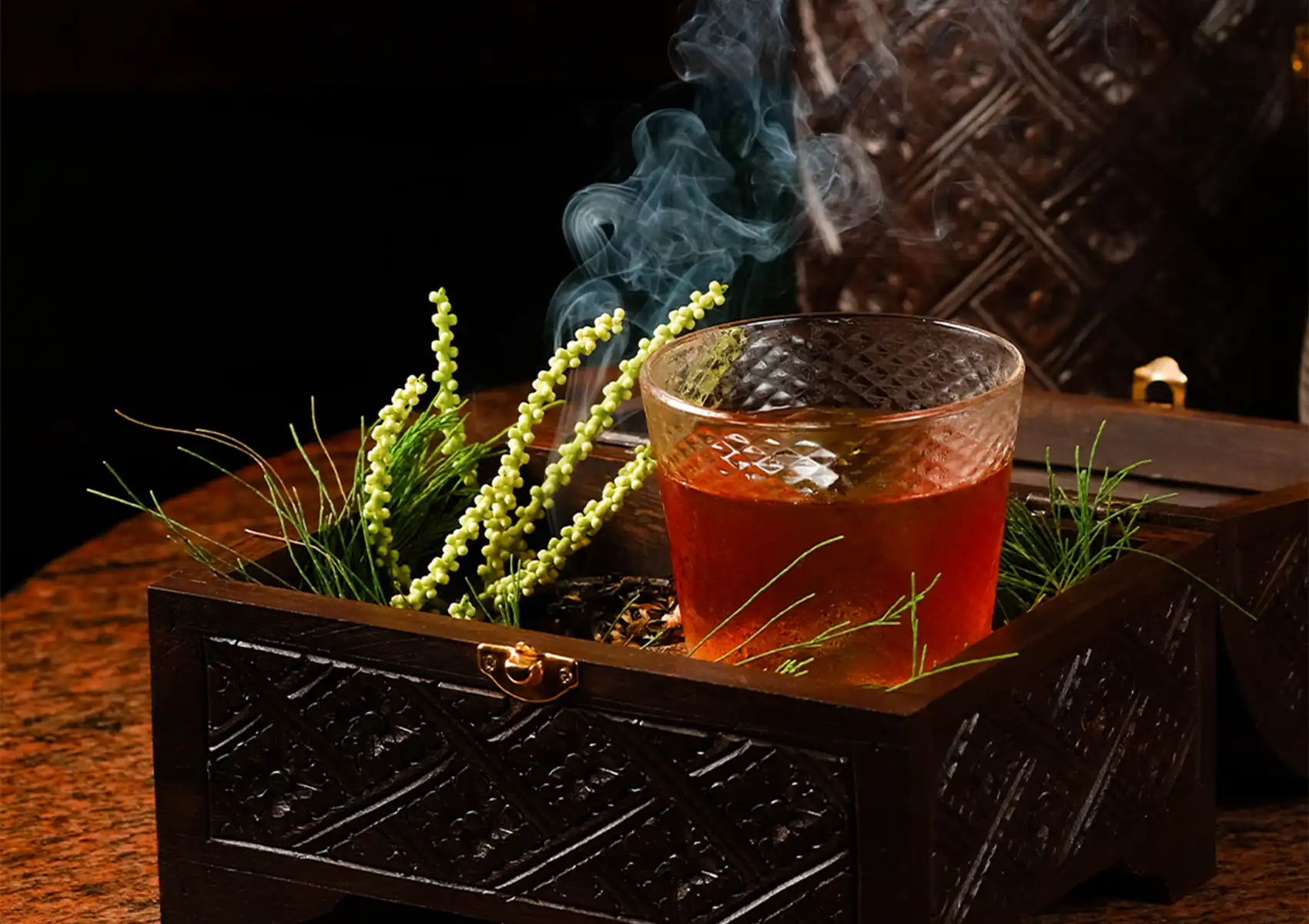
In the cocktails, Jack & Rose uses a jackfruit Cognac alongside coco pandan Campari, rose and prosecco. The Cognac provides the structure under the fruit, while the jackfruit builds on its natural fruit character rather than overwhelming it.
The Prince takes a different approach, built on Godet No.1 Cognac and treating the spirit as a central part of the drink rather than simply a base. It is the order for anyone who wants to see how Cognac behaves when it remains clearly identifiable in a cocktail.
Between the two, the list makes the same argument this article does. Cognac is specific enough to be worth naming, while brandy is a broad category that becomes much more meaningful once you know where and how it was made.
Reserve Your Table at Pinstripe Bar
Cognac is best approached where you can compare houses and grades in one sitting, which is a reasonable thing to expect from a cocktail bar in Ubud with a deep spirits list. Pinstripe Bar sits above the Valley of the Kings and opens daily from 4 PM to 11.30 PM, with the food menu running from 5 PM to 9 PM and live music on Friday and Saturday evenings.
Ask the bar team for two expressions side by side, and tell them whether you want to taste them neat or over ice.
Frequently Asked Questions
What is the difference between cognac and brandy?
Brandy is a broad category of spirits made by distilling fermented fruit or fruit-based wine. Cognac is a specific type of brandy produced in the Cognac region of France under defined rules covering grapes, distillation and ageing. All Cognac is brandy, but only a small portion of the world’s brandy is Cognac.
What do VS, VSOP and XO mean?
They are Cognac ageing classifications based on the youngest eau-de-vie in the blend. VS requires at least two years of ageing, VSOP at least four years, and XO at least ten years. VS is particularly suited to cocktails and long drinks, while older VSOP and XO expressions can be enjoyed neat or used in cocktails designed to showcase their character.
How should you drink cognac?
Older Cognac is well suited to drinking neat at room temperature in a tulip-shaped glass. Younger Cognac can work over one large cube, in a long drink with tonic or ginger ale, or in cocktails such as a Sidecar.