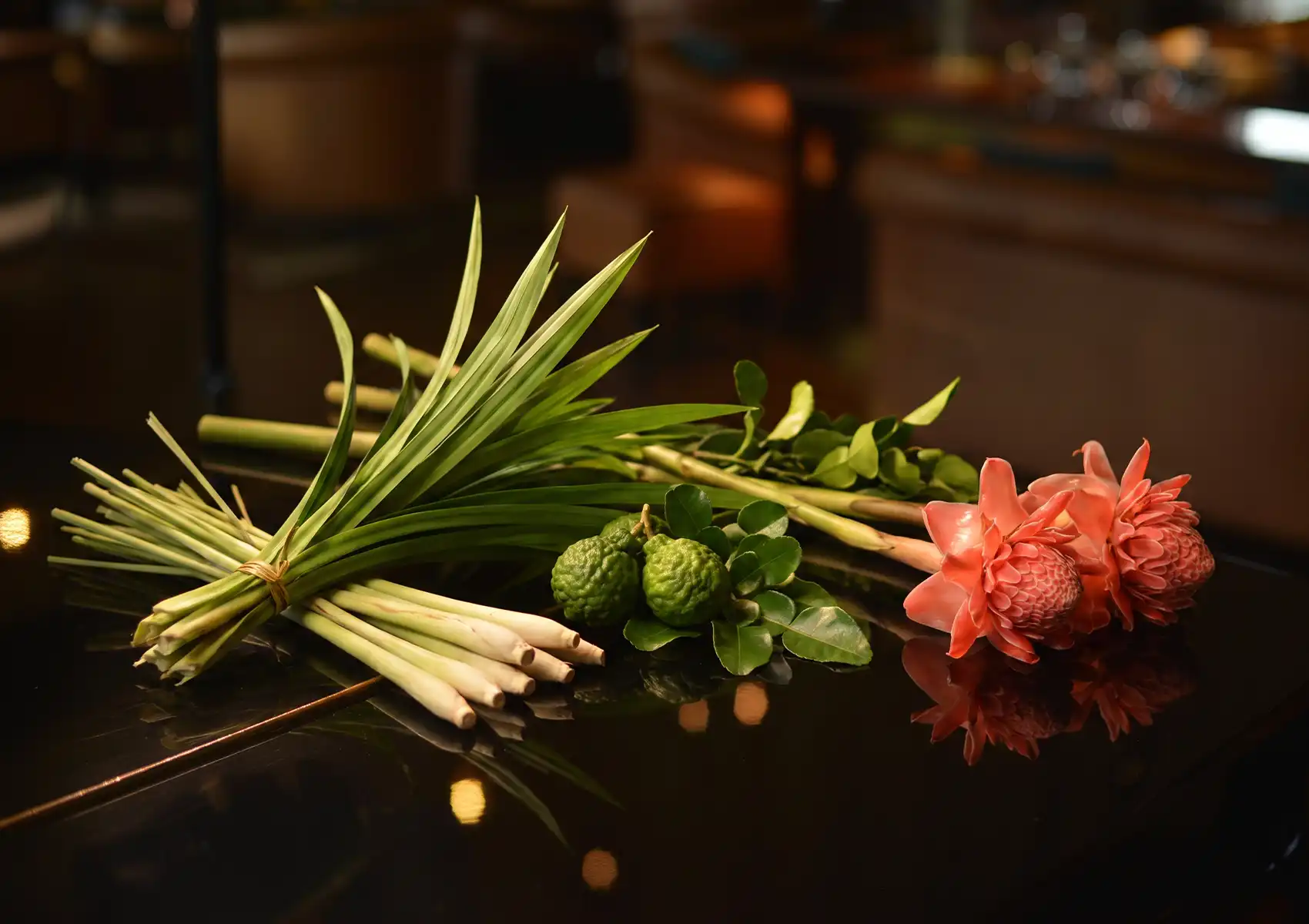
The Balinese botanicals in cocktails are part of what makes a drink in Ubud taste of its surroundings rather than simply of the spirit behind it. At a cocktail bar in Ubud, they are often the ingredients you notice without immediately being able to name. Most visitors recognise lemongrass and stop there. The list is much longer, from pandan and makrut lime to torch ginger, jackfruit and salted plum.
What Are Balinese Botanicals
Balinese botanicals are the herbs, leaves, roots, fruits and spices used across the island’s cooking and traditional practices, now finding their way into cocktails as well. They are not exotic additions to a Western drink. They are familiar ingredients being used in a different setting.
That distinction matters because it changes how they are used. An imported botanical may arrive as a flavour concept, chosen from a supplier’s list. A local ingredient comes with a culinary tradition attached, giving the bar team an understanding of what it works well with. Pandan, for example, is commonly used alongside coconut and rice in Southeast Asian cooking, making it a natural partner for coconut-led drinks.
Freshness matters too. Aromatic leaves and herbs can lose some of their character through drying, processing and transport, so using them close to where they are grown can give a drink a more immediate aroma.
The Key Botanicals to Know
Once you start looking for them on cocktail lists, the same handful of ingredients appear again and again, with each bringing something different to the glass.
Pandan is one of the most recognisable. This long green leaf has a grassy, aromatic character often described as vanilla-like. It can give a drink a dessert-like quality without simply adding more sugar, which is why it works particularly well with coconut and creamy flavours.
Lemongrass brings a clean citrus aroma without the acidity of lime. It can lift a drink without making it sour, and its aromatic character works particularly well in infusions and syrups.
Makrut lime leaf, sometimes called kaffir lime leaf, is intensely aromatic, with a concentrated citrus and floral character. A small amount can carry across an entire drink, so it needs to be used carefully.
Torch ginger, the flower of a ginger relative, has a tart, floral character with a gentle peppery edge. It is one of the more unusual ingredients for visitors to encounter in a cocktail and can add acidity and aroma without relying entirely on citrus.
Jackfruit is dense, fragrant and naturally sweet, with tropical notes that can suggest banana and other ripe fruit. Unlike citrus, it contributes body and richness rather than sharp acidity.
Kalamansi, also known as calamansi, is a small citrus fruit widely used across Southeast Asia. It has a bright, aromatic acidity and can bring a sharper, more distinctive character than standard lime.
Salted plum contributes a combination of salt, sourness and savoury depth. Rather than functioning purely as a fruit flavour, it can work almost like seasoning, helping to bring sweetness and acidity into balance.
Why They Work in Cocktails
These ingredients do more than make a cocktail sound local. They can perform specific jobs that help shape the drink.
Aroma is the first. Makrut lime leaf and lemongrass deliver plenty of fragrance without adding much volume or liquid. Because aroma plays such an important role in how we perceive flavour, these ingredients can change the character of a drink before the first sip.
Balance is the second. Ingredients such as torch ginger and salted plum can introduce tart, savoury or lightly spiced notes that give sweetness somewhere to go. Instead of relying entirely on bitters or other modifiers, a bar can use the character of the ingredient itself to build complexity.
Freshness is the third. Aromatic leaves, herbs and fruits can be particularly expressive when used close to where they are grown. That gives a bar in Ubud access to ingredients that feel naturally connected to the landscape around it.
Coherence is the final reason. A drink built around ingredients that are familiar to the place where it is served can feel more considered than a cocktail that simply adds a tropical garnish for decoration.
Balinese Botanicals at Pinstripe Bar
At Pinstripe Bar, these ingredients run through the signature menu rather than being confined to a novelty section. Several drinks show how differently the same approach can be interpreted.
The Primitivist takes the tropical route, combining gin and coconut rum with pineapple and passion fruit. Pandan and lemongrass add another layer beneath the fruit, giving the drink aromatic depth rather than leaving it as a straightforward tropical serve.
Scarface puts torch ginger at the centre, with aged cacao butter adding weight and richness. The tart, floral character of the torch ginger gives the cacao something to push against, making this a useful introduction to an ingredient many visitors may never have encountered in a cocktail.
The Tramp brings together makrut lime, jackfruit and salted plum. The combination moves between perfume, ripe fruit and savoury acidity, with the salted plum helping to keep the sweetness of the jackfruit in check.
Kembang Desa takes a more direct approach, pairing lemongrass with makrut lime. With two strongly aromatic ingredients working together, it offers a straightforward introduction to the kind of botanical character that can shape a cocktail without dominating it.
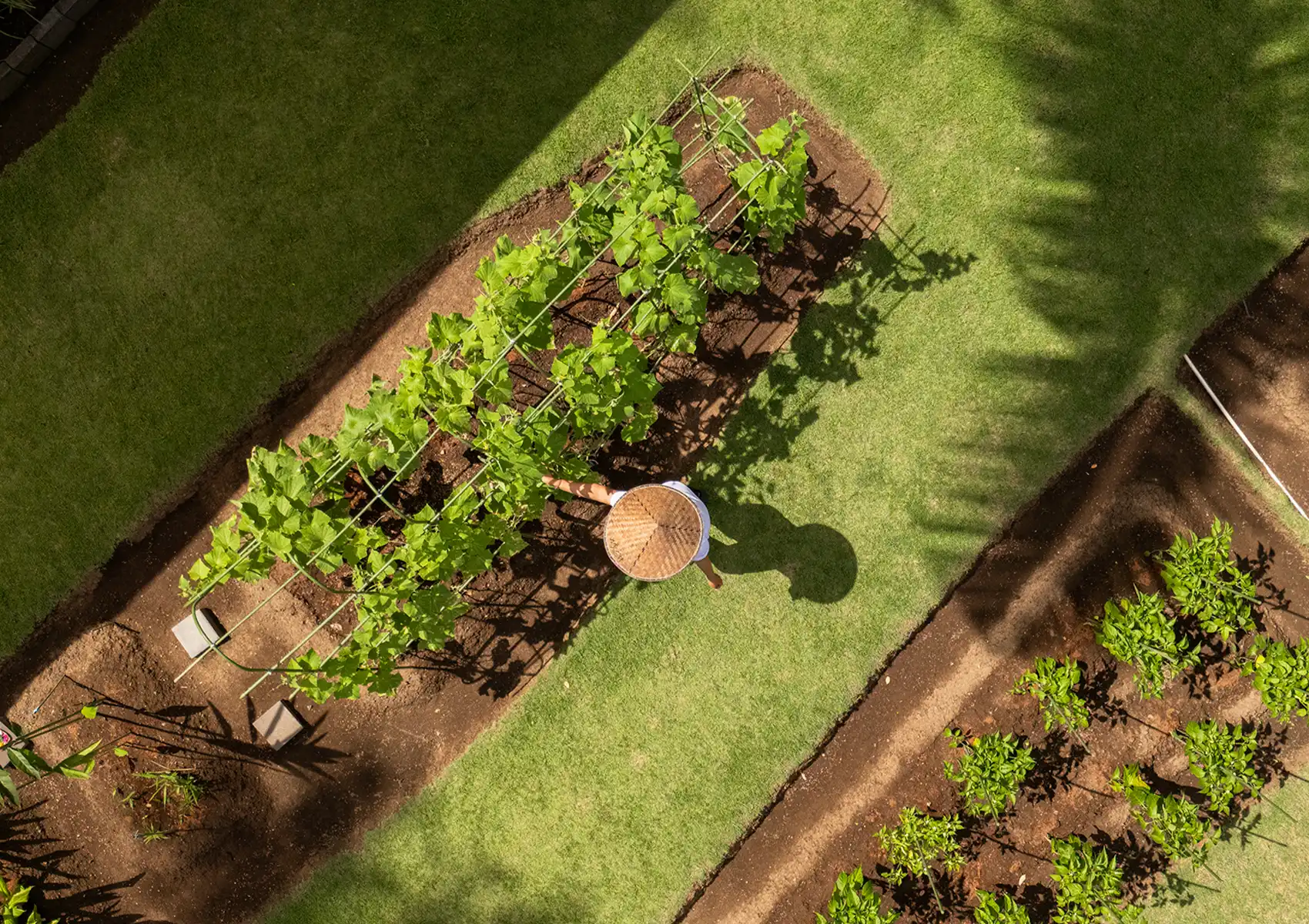
Much of this produce comes from the estate’s kitchen garden, shared with the Apéritif kitchen, helping the bar work with fresh ingredients rather than relying solely on processed or bottled alternatives.
Reserve Your Table at Pinstripe Bar
Botanical cocktails make the most sense when they are connected to their surroundings. At Pinstripe Bar, ingredients such as pandan, lemongrass, makrut lime and torch ginger bring some of the flavours familiar from Balinese and Indonesian kitchens into a cocktail setting.
Set above the Valley of the Kings, Pinstripe Bar offers an open view across the Ubud landscape alongside a menu built around spirits, fresh ingredients and house-made elements.
Ask the bar team which botanical they recommend and start with the ingredient you know least.
Reserve your table at Pinstripe Bar
Frequently Asked Questions
What is pandan in a cocktail?
Pandan is a long green leaf with a grassy, aromatic character often described as vanilla-like. It is widely used in Southeast Asian cooking, particularly in preparations involving rice and coconut. In a cocktail, it can add a dessert-like aroma and depth without relying solely on additional sugar.
What does lemongrass add to a drink?
Lemongrass adds a clean citrus aroma without the acidity of lime. It can lift a cocktail without making it sour and works particularly well when used in infusions, syrups or as an aromatic garnish.
What is torch ginger?
Torch ginger is the flower of a ginger relative native to Southeast Asia. Its flavour is tart, floral and lightly peppery, with an acidity that can resemble rhubarb. In cocktails, it can provide a distinctive sour and aromatic character without relying entirely on citrus.
What Is Makrut Lime Leaf?
Makrut lime leaf is an intensely aromatic citrus leaf commonly used in Southeast Asian cooking. It has a concentrated citrus and floral character and is often used in small amounts because its aroma can quickly become dominant.